Introduction:
In today's fast-paced world, businesses face an ever-growing need to adapt and evolve with new technologies. Digital transformation is no longer a luxury—it’s a necessity. As industries increasingly embrace technology to streamline operations, enhance customer experiences, and stay competitive, digital transformation services and solutions have become essential to organizational success.
Digital transformation represents a shift from traditional business models to ones driven by technology. Whether it's automating business processes, adopting cloud services, or integrating artificial intelligence, these changes bring new opportunities for efficiency, growth, and innovation. However, the path to transformation can be complex and requires careful planning, expert knowledge, and the right tools.
This guide will explore the key components of digital transformation, the services that can support your journey, and how digital transformation solutions can empower businesses to thrive in the modern world.
What is Digital Transformation?
Digital transformation involves the adoption of digital technologies to fundamentally change how a business operates and delivers value to its customers. It’s not just about using the latest tools or upgrading software; it’s about reimagining every aspect of your business, from internal processes to customer interactions, and everything in between.
The ultimate goal of digital transformation is to increase efficiency, enhance decision-making, foster innovation, and improve customer satisfaction. The rise of cloud computing, automation, data analytics, and artificial intelligence has made these transformations both possible and more accessible than ever before.

The Pillars of Digital Transformation
- Automation of Processes: Streamlining business processes through automation is a cornerstone of digital transformation. By using software to automate repetitive tasks, companies can reduce human error, increase efficiency, and free up employees to focus on more strategic work. This shift not only drives productivity but also helps in reducing operational costs.
- Enhanced Data Analytics: Data is at the heart of digital transformation. With powerful tools for collecting, analyzing, and interpreting data, businesses can gain valuable insights into customer behavior, market trends, and internal operations. These insights are crucial for making informed decisions and improving overall business strategy.
- Cloud Adoption: Cloud computing allows businesses to scale operations without the need for significant upfront investments in hardware. Cloud-based solutions offer flexibility, scalability, and security while providing employees with access to applications and data from anywhere. This remote accessibility has proven invaluable in the modern, increasingly remote workforce.
- Artificial Intelligence (AI) and Machine Learning (ML): AI and ML are revolutionizing industries by enabling businesses to make smarter decisions faster. Whether it’s through chatbots for customer service, predictive analytics for inventory management, or personalized marketing strategies, AI and ML can significantly enhance a company’s operations and customer experience.
- Customer-Centric Approach: Digital transformation places a strong emphasis on creating better, more personalized experiences for customers. By leveraging digital tools, businesses can offer tailored products, services, and experiences that meet the specific needs of their customers. This focus on customer satisfaction is critical to staying competitive in today’s market.
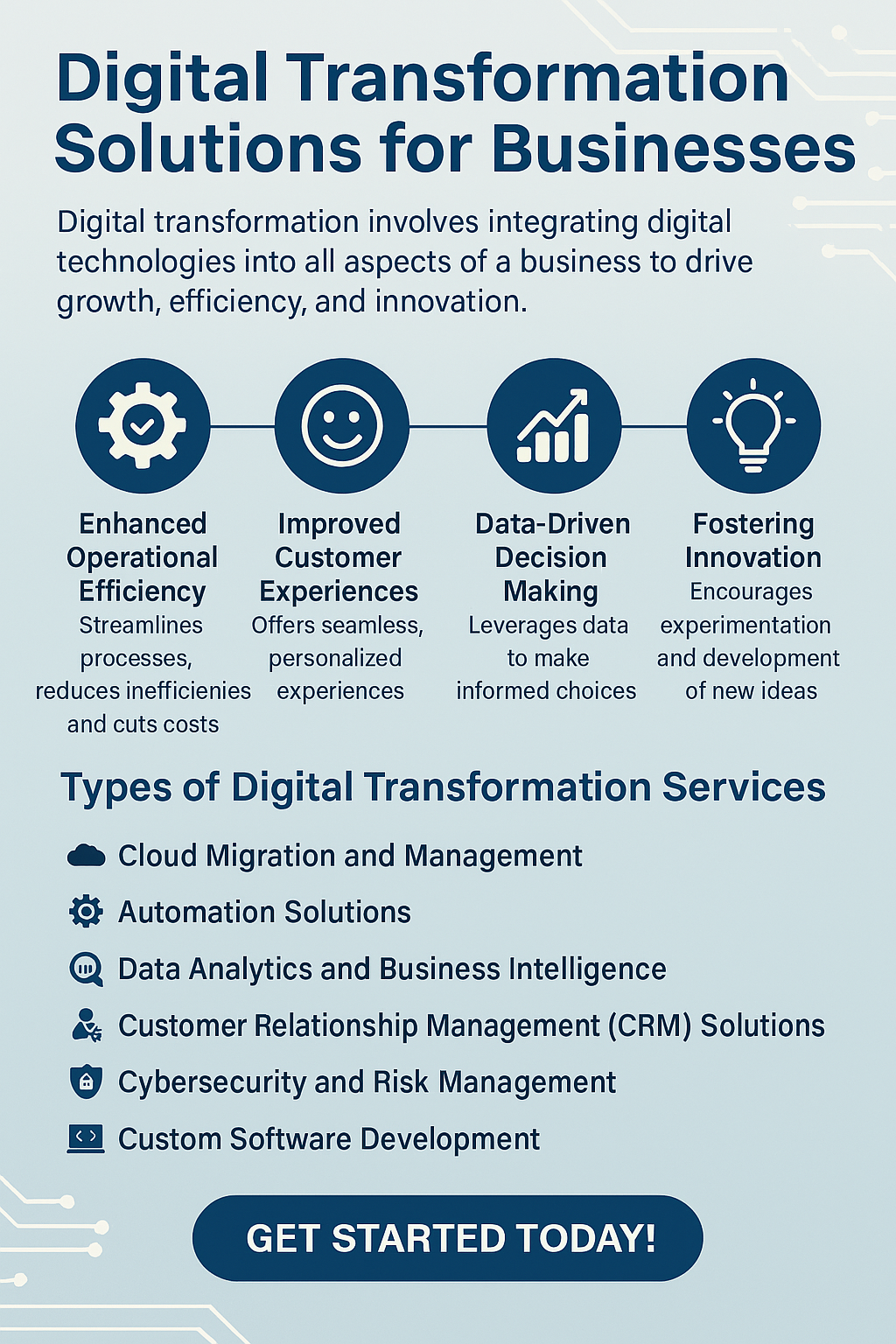
Why Digital Transformation Matters
- Improved Efficiency: With automation and AI-driven tools, business processes become faster, more efficient, and less error-prone.
- Enhanced Customer Experience: Digital transformation enables personalized interactions with customers, leading to greater satisfaction and loyalty.
- Agility and Flexibility: Businesses that undergo digital transformation are more agile, capable of quickly adjusting to market changes or disruptions.
- Cost Reduction: With automation and cloud services, companies can reduce overhead costs and reinvest savings into growth strategies.
- Data-Driven Decision Making: Businesses can make more informed decisions by leveraging advanced analytics, improving outcomes, and reducing risks.
Digital Transformation Services: A Roadmap to Success
For many businesses, the journey to digital transformation can seem overwhelming. This is where digital transformation services play a pivotal role. These services provide expertise and guidance throughout the process, ensuring that businesses implement the right technologies and strategies to achieve their goals.
Here’s how digital transformation services can support businesses at different stages of the transformation process:
- Consulting and Strategy Development: Digital transformation begins with a solid strategy. This involves assessing current processes, identifying areas for improvement, and creating a roadmap for integrating technology. Experienced consultants can help design a transformation strategy that aligns with business objectives and ensures long-term success.
- Technology Integration: Implementing the right technologies is crucial for a successful digital transformation. Services in this area help integrate tools like cloud platforms, data analytics software, and automation tools into the existing infrastructure. This seamless integration ensures minimal disruption and maximum efficiency.
- Change Management: Digital transformation affects people as much as it affects processes and technology. Change management services help organizations navigate the cultural and operational shifts that accompany the implementation of new systems and practices. These services ensure that employees are trained, prepared, and fully onboard with the changes.
- Data Analytics and Insights: Data is one of the most valuable assets in a digital transformation. Digital transformation services help businesses leverage advanced data analytics tools to gain actionable insights into customer behavior, operations, and trends. These insights are used to refine business strategies, enhance decision-making, and foster innovation.
- Cloud Migration: Migrating to the cloud can seem like a daunting task, but it’s an essential step in the digital transformation process. Expert services assist in moving data, applications, and infrastructure to the cloud, ensuring a smooth transition with minimal downtime.
- Ongoing Support and Optimization: The digital transformation journey doesn’t end after implementation. Ongoing support ensures that the new systems are working efficiently, and optimization services help continually improve performance. Regular updates, security enhancements, and adjustments ensure the transformation remains aligned with evolving business needs.

Key Digital Transformation Solutions for Businesses
The solutions businesses choose depend on their specific needs, industry, and goals. Here are some popular digital transformation solutions that are widely adopted across various sectors:
- Cloud-Based Software Solutions: Moving to cloud-based software allows businesses to reduce infrastructure costs, improve scalability, and access critical data and tools remotely. Solutions such as customer relationship management (CRM) systems, enterprise resource planning (ERP) software, and collaboration platforms are integral to digital transformation.
- Automation Tools: Workflow automation tools, robotic process automation (RPA), and AI-driven systems are used to streamline business processes. From automating routine administrative tasks to managing complex supply chain processes, automation tools are essential for improving operational efficiency.
- Customer Relationship Management (CRM) Systems: CRM systems help businesses manage interactions with customers and prospects, providing a 360-degree view of customer data. By adopting an integrated CRM system, businesses can enhance communication, improve customer service, and deliver personalized experiences.
- Enterprise Resource Planning (ERP) Systems: ERP systems integrate core business functions like finance, human resources, and operations into a single platform. This integration allows businesses to streamline processes, reduce redundancies, and make data-driven decisions.
- Mobile Applications and Platforms: As mobile usage continues to rise, businesses are increasingly developing mobile applications to provide customers with seamless experiences. Mobile platforms also help internal teams stay connected and productive, even when working remotely.
Conclusion
Digital transformation is not just a trend; it’s the future of business success. By embracing digital transformation services and solutions, organizations can enhance operational efficiency, improve customer satisfaction, and unlock new opportunities for growth and innovation.
For businesses looking to stay ahead of the curve, investing in the right digital transformation strategies is crucial. Whether it’s through cloud adoption, automation, data analytics, or AI, digital transformation opens up a world of possibilities.
Ready to take the next step?
Explore how digital transformation solutions can revolutionize your business and position you for success in the digital age. Start the transformation journey today—don’t let your competition get ahead. Reach out to industry experts and unlock your company’s full potential.

For Quick Contact,
Call/Whatsapp: +91 8778074071
E-Mail: info@malgotechnologies.com